A Forensic Deconstruction of the Mary Magdalene
Marriage Myth and its Socio-Cognitive Implications
📄 Note: This article is a curated excerpt encompassing Sections 1 through 4 of the official research paper titled: “Epistemic Rupture and the Weaponization of Narrative: A Forensic Deconstruction of the Mary Magdalene Marriage Myth and its Socio-Cognitive Implications” authored by Dr. Kerolos K. Rezk. This study has been formally archived and published in the global open-science repositories, CERN’s Zenodo and SSRN, and carries a permanent international identifier.
1. Introduction
1.1 The Intellectual Context: The Resurgence of Alternative Origins
The transition into the third millennium was marked by a profound shift in the public consumption of religious history. The “Mary Magdalene Marriage Myth”—the hypothesis that a biological lineage of Jesus Christ was preserved through a secret union with Mary Magdalene—migrated from the periphery of occultist speculation into the center of global pop-culture discourse. This resurgence was catalyzed primarily by the “Dan Brown paradigm,” a literary and cinematic phenomenon that synthesized 20th-century pseudo-history (e.g., Holy Blood, Holy Grail) with a fast-paced thriller narrative. This paradigm did not merely offer a fictional story; it claimed a foundation in “fact,” thereby blurring the boundaries between historical inquiry and creative license.(Ehrman, 2004; Bock, 2004)
1.2 Defining the Research Gap: Narrative Hijacking
While extensive scholarship exists regarding the “Historical Jesus” (Sanders, 1993; Meier, 1991-2016) and the “Reception History” of Mary Magdalene (Haskins, 1993), there remains a critical research gap in understanding the mechanism of narrative hijacking. This process involves the strategic extraction of fragmented, often lacunose, ancient texts from their original theological contexts to fabricate alternative historical lineages (Evans, 2012). Modern dynamic cultural narratives frequently ignore the chronological and genre-specific boundaries of ancient literature, substituting rigorous exegesis with eisegetical projection (Witherington III, 2004). There is a pressing need for an integrated analysis that clinicalizes these textual disconnections and evaluates their impact on contemporary social structures.
1.3 Thesis Statement
This paper contends that the “Jesus Marriage Myth” is a modern socio-literary construct devoid of foundational support in primary historical or textual sources. It posits that the myth’s endurance is sustained by “Conspiracy Cognition” and the projection of secular romantic archetypes onto 1st-century theological figures. Through a clinical deconstruction of canonical, Gnostic, and archaeological evidence, this study seeks to demonstrate that the “secret” Magdalene is a product of systemic historical disinformation, and that this disinformation carries a measurable human cost, destabilizing individual and collective contemporary realities (Rezk, 2026).
2. Literature Review & Conceptual Framework
2.1 The Socio-Literary Anatomy of Pseudo-History
To analyze the Magdalene myth, we must first establish a definition of “Pseudo-History.” Unlike legitimate historical revisionism, which utilizes new data to refine existing models, pseudo-history operates through “Narrative Weaponization.” This is the deployment of compelling, often conspiratorial, stories designed to undermine established records for ideological, political, or commercial purposes (Evans, 2012).
The anatomy of the Magdalene myth relies on three conceptual pillars:
- Conspiracy Cognition: The psychological framework where the absence of evidence is interpreted as the ultimate proof of a successful cover-up by a powerful entity (e.g., the Vatican) (Ehrman, 2004).
- Epistemic Rupture: The point at which an individual or group rejects a shared evidentiary reality in favor of a narrative that offers higher emotional or ideological satisfaction.(Rezk, 2026).
- Anachronistic Projection: The imposition of modern values—such as romantic self-fulfillment and egalitarian partnership—onto ancient social structures where such concepts were non-existent (Witherington III, 2004).
2.2 From Theological Symbol to Romantic Instrument
Historically, Mary Magdalene functioned within the Christian tradition as a multifaceted symbol: the Apostola Apostolorum (Apostle to the Apostles) in the East, and the “Penitent Sinner” in the West (following the conflation by Pope Gregory I in 591 CE) (Haskins, 1993; Jansen, 2000). However, the late 20th-century shift, influenced by the “Sacred Feminine” movement, reimagined her as a romantic instrument. Authors like Margaret Starbird (The Woman with the Alabaster Jar) and Dan Brown shifted the discourse from her apostolic authority to her marital status (Bock, 2004; Ehrman, 2004). This shift reflects a broader secularization of religious figures, where their significance is no longer found in their relationship to the divine, but in their adherence to modern relational norms.
3. Methodology: Textual Criticism and Historical Deconstruction
The methodology employed in this study is rooted in the “Historical-Critical Method.” This involves:
- Source Criticism: Evaluating the dating, provenance, and reliability of texts.
- Philological Analysis: Examining the semantic range of key terms in their original languages (Greek and Coptic).
- Archaeological Contextualization: Grounding historical figures in the material reality of their time and place.
- Reception History: Tracing how interpretations evolved and where distortions were introduced.
4. The Historical Mary Magdalene: Canonical and Archaeological Evidence
4.1 The Archaeological Profile of Magdala (Tarichaea)
A foundational step in deconstructing the myth is grounding the subject in her 1st-century context. The manuscript highlights the significance of recent excavations at Magdala (ancient Tarichaea) (Rezk, 2026).
- Economic Independence: Archaeology reveals Magdala as a prosperous fish-processing hub on the Sea of Galilee (Aslan, 2013). The discovery of a 1st-century synagogue and upscale domestic structures suggests a society where women of means could exercise a degree of financial agency.
- The Patronage Model: This supports the canonical depiction in Luke 8:1-3, where Mary Magdalene is listed among women who “provided for [Jesus] out of their resources.” (The Holy Bible: New Revised Standard Version, 1989). This historical reality of patronage is far more plausible than the modern myth of marriage. Mary’s prominence in the movement was rooted in her role as a financial and faithful supporter, a role that required no marital bond for legitimacy (Bauckham, 2002).
4.2 The “Seven Demons” Fallacy: Healing vs. Moral Depravity
A critical point of deconstruction is the interpretation of Mary’s “seven demons” (Luke 8:2) (The Holy Bible: New Revised Standard Version, 1989).
- The Western Conflation: In 591 CE, Pope Gregory I erroneously linked these “demons” to the seven deadly sins, specifically sexual immorality. This created the “Prostitute” archetype (Jansen, 2000).
- The Forensic Correction: In 1st-century Jewish thought, demon possession was a category of affliction or illness, not a moral indictment (Meier, 1991-2016). The number “seven” signified the completeness of her suffering and, subsequently, the totality of her healing by Jesus (Witherington III, 2004). By restoring her to the status of a “healed disciple” rather than a “repentant whore,” we remove the “sinner-to-saint” romantic arc that modern myth-makers exploit to suggest a sexual relationship (Haskins, 1993).
4.3 The Argument from Silence: A Genre Evaluation
Proponents of the marriage myth argue that the Gospels are silent on Jesus’s marriage because it was “common knowledge.” However, this ignores the conventions of the ancient bios (biography) (Brown, R. E., 1997).
- Familial Identification: The Gospels are not hesitant to name Jesus’s mother, brothers (James, Joses, Judas, Simon), and sisters. They even mention Peter’s mother-in-law (The Holy Bible: New Revised Standard Version, 1989). The consistent omission of a wife in a culture that meticulously recorded familial ties is a “loud silence.” (Bock, 2004).
- The Prophetic Vocation: Within the context of 1st-century Jewish apocalypticism (e.g., the Essenes or John the Baptist), celibacy was a recognized, albeit minority, path for those dedicated to an urgent divine mission (Sanders, 1993). The canonical evidence suggests Jesus inhabited this prophetic-ascetic role, which is theologically consistent with his message of the “Kingdom of God” superseding earthly domestic ties (Wright, N. T., 1996).
4.4 The “Apostle to the Apostles” and the Resurrection Witness
The primary historical significance of Mary Magdalene lies in her role as the first witness to the Resurrection (John 20) (The Holy Bible: New Revised Standard Version, 1989).
- The Commissioning: Jesus’s command to “Go and tell my brothers” (John 20:17) establishes her as the foundational herald of the Christian kerygma (Ehrman, 2006).
- The Eastern Tradition: The Coptic and Syriac traditions (Rezk, 2026) have consistently maintained her title as Isapostolos (Equal to the Apostles). This tradition, which never accepted the Western “prostitute” conflation, provides a control group that proves Mary’s authority was always understood as apostolic rather than conjugal (Haskins, 1993). The modern myth essentially “demotes” her by suggesting her authority came from being a wife rather than being a commissioned witness (Bauckham, 2002).
📊 Explore the Full Research & Empirical Framework:
To review the subsequent sections of this study—including the complete linguistic and philological deconstruction of the Gnostic Codices (the Gospel of Philip and the Gospel of Mary), the decoding of the koinōnos fallacy, and the complete sociological evaluation of the human cost of narrative disinformation—you can access and download the full, unredacted academic paper – and the full list of References – via its permanent DOI resolver:
- Direct International Academic Link: https://doi.org/10.5281/zenodo.20371226
How to read more about the subject?
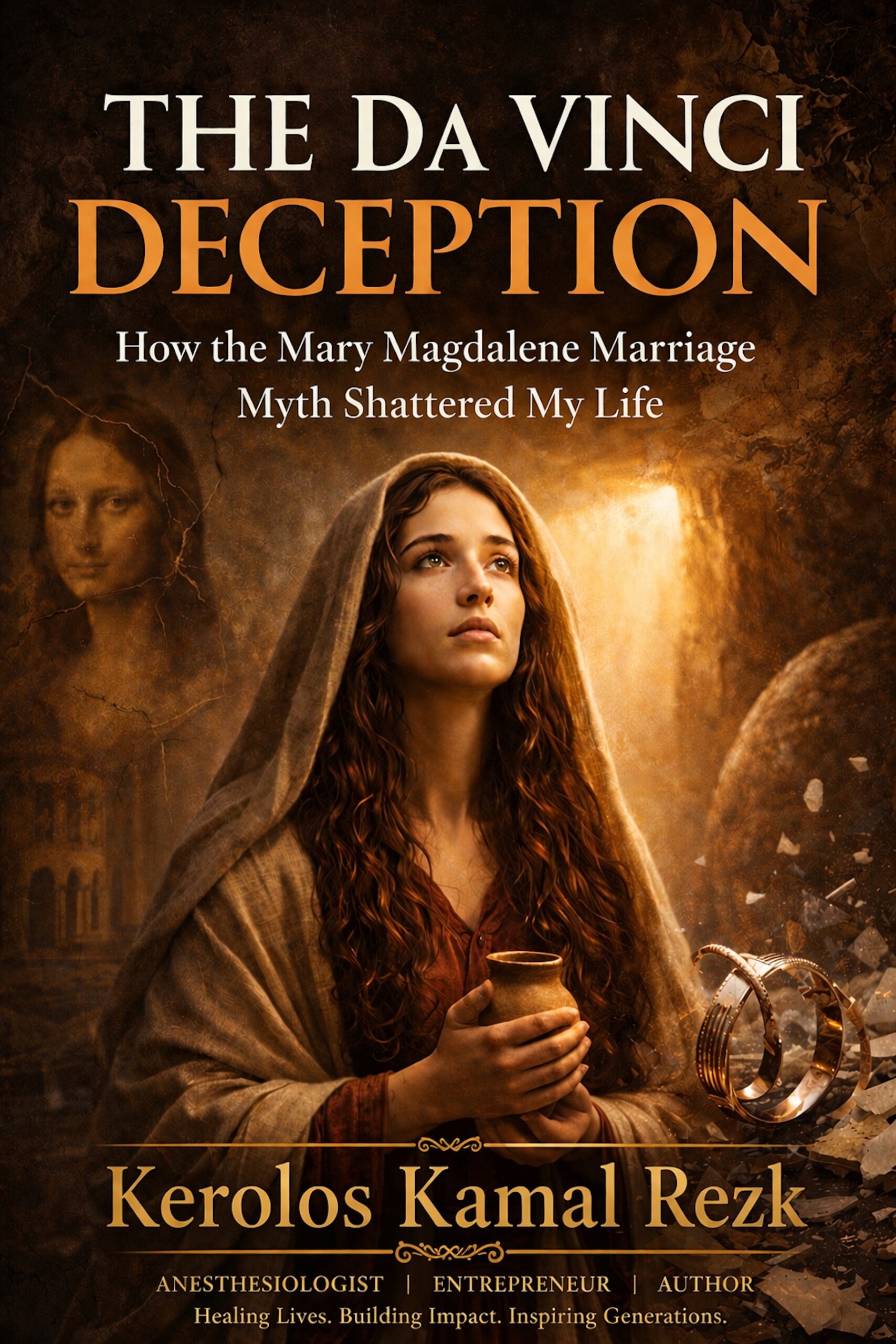
🏛️ The Primary Source Monograph: This paper serves as the theoretical and academic continuation of the comprehensive, multi-year empirical investigation and personal case study documented in the published book:
- Book Title: The Da Vinci Deception: How the Mary Magdalene marriage myth shattered my life.
- Publisher: Breaking Barriers / Kerolos LLC (New Mexico, USA).
- Global Identifier: ISBN: 9798950466991.
The complete volume, outlining the forensic data, distribution mechanisms, and the real-world impact of this cultural phenomenon, is available worldwide for researchers and libraries via Amazon Author Central and major international book repositories.